Cast Iron Pipe Fittings
Hubless Pipes
Published by Admin on January 5, 2026

Cast Iron Pipe Fittings
Grey iron pipes have served water supply and drainage systems for decades due to their strength, durability, and excellent corrosion resistance. Their reliability comes not only from the material itself but also from a carefully controlled manufacturing process. Understanding how CI pipe manufacturers in India produce grey iron pipes highlights why they continue to perform well in demanding environments. Here, we will guide you through a detailed, step-by-step procedure to explain the manufacturing process of cast iron pipes.
Grey and cast iron pipes are renowned for their durability, strength, and versatility across several sectors. Knowing how these pipes are made reveals the expertise and precision required in their production. Below is a clear, step-by-step explanation of how manufacturers produce grey iron pipes.
The manufacturing process for grey iron pipes begins with selecting high-quality raw materials. Cast iron typically contains scrap iron, pig iron, and steel, combined with alloying elements such as silicon and carbon. Grey iron is a thriving combination of:
All these materials undergo careful inspection to ensure quality and meet the rigorous standards.
The next step in making grey iron pipes is melting the iron. The foundry team melts the raw materials in a high-capacity furnace at temperatures above 1,150°C (2,100°F). Below are the types of furnaces commonly used in grey iron pipe manufacturing.
During melting, leading CI pipe manufacturers in India carefully blend the raw materials to achieve a consistent molten iron mixture. They also carefully track the molten metal’s chemistry to maintain exact compositional balance.
The third step of making cast iron pipes is moulding. After the iron is molten, the operators pour it into sand, resin, or metal moulds. Engineers design these moulds to match the exact shape and dimensions required. This stage is critical to ensuring the finished casting meets precise size and quality standards.
Cooling and solidification are the phases in which the molten iron in the mould cools and solidifies. This cooling procedure ensures that the casting takes its ultimate shape while retaining structural integrity. Proper cooling process prevents imperfections and ensures the durability of the casting.
Once the metal hardens, workers remove the castings from the moulds and begin cleaning. They remove leftover sand, scale, and unwanted residues to ensure a clean surface. The castings then undergo finishing steps such as grinding, machining, and polishing to achieve accurate dimensions and the required surface finish.
Grey iron is available in different grades, each suited for a particular application. You can refer to any hubless pipe fitting catalogue for a more precise and detailed understanding. Standard material grades include:
Every grey iron casting undergoes stringent quality checks. These involve material checks, dimensional tests, and performance evaluation to ensure the product meets industry standards and client requirements.
The last and final stage of manufacturing grey iron pipe is packaging and delivery. This stage involves securely packaging the casting to protect it during transport. Our logistics professionals ensure prompt, efficient delivery, reinforcing our commitment to reliability and excellence in cast iron manufacturing.
As a leading CI pipe manufacturer in India, Bengal Iron Corporation combines decades of industry experience with advanced technology and a strong focus on quality. Our modern manufacturing facilities feature state-of-the-art equipment, enabling high precision, consistent performance, and operational efficiency at every stage of production. Reach out to us today to discover our high-quality cast iron castings and see firsthand the benefits of collaborating with a trusted industry leader.
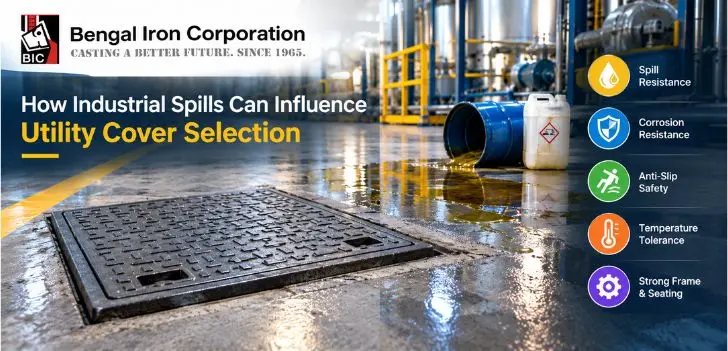
09 Oct 2026 by Admin
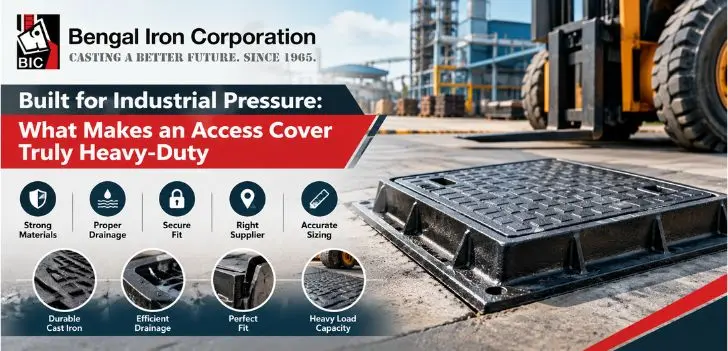
30 Sep 2026 by Admin
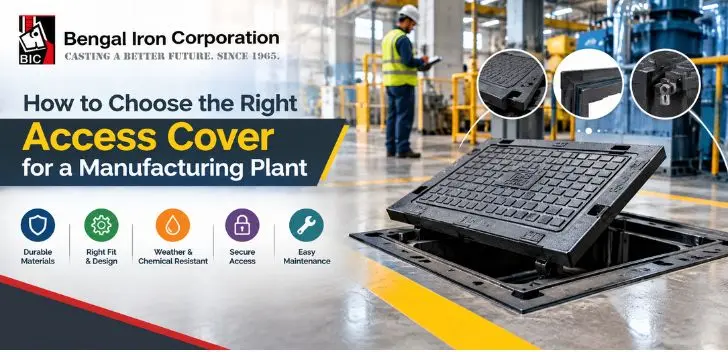
25 Sep 2026 by Admin

21 Sep 2026 by Admin
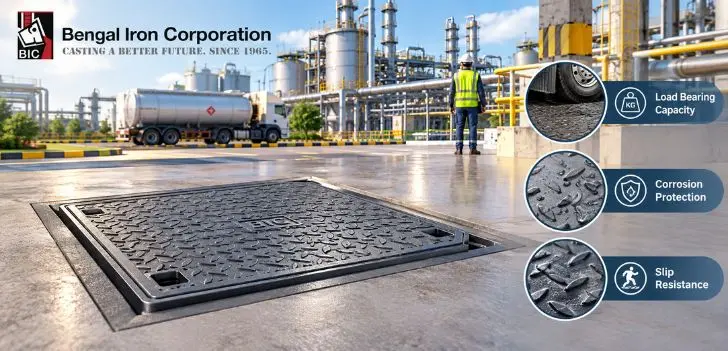
17 Sep 2026 by Admin
3989 Pipes (1)
Access Covers (8)
Agricultural (5)
BIC Events (9)
Cast Iron (105)
Cast Iron Exporter (36)
Cast Iron Gratings (2)
Cast Iron Pipe (26)
Cast Iron Pipe Fittings (24)
Cast Iron Products (79)
Drain Cover (6)
Ductile Iron (40)
Ductile Iron Manufacturers (24)
Ductile Iron Products (41)
Foundry (6)
Global Market (2)
Gray Iron Exporter (3)
Hubless Pipe (13)
Hubless Pipes (21)
Inspection Covers (4)
Iron Foundry (8)
Manhole Covers (179)
Manhole Covers Manufacturer (65)
Pig Iron (2)
Recessed Chamber Cover (2)
Uncategorized (3)
Uncategorized (3)
Enquire Now




