Round vs Rectangular Covers: Choosing the Right Option for Your Project

A manhole cover plays a vital role in protecting underground utilities. It also supports traffic and gives maintenance teams safe access when required. Yet, one important question often gets overlooked: should you choose a round or rectangular cover? The answer depends on the chamber design, access needs, load, and project location. In this blog, we will discuss the major differences between round and rectangular manhole covers.

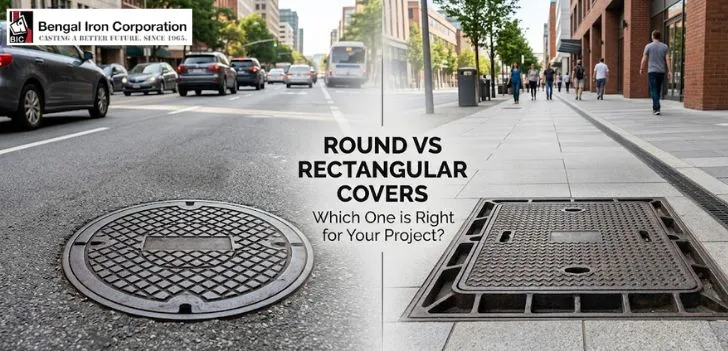
Round vs Rectangular Covers: Which One is Right?

Both round and rectangular designs have their own purpose. In fact, IS 1726 recognizes different shapes and duty grades of cast iron manhole covers, including circular and rectangular options. This shows why project requirements should guide the selection, not shape alone. Below are some notable factors that can help you choose the right recessed chamber cover in India.

Round Covers Offer Practical Handling

Round manhole covers are widely used for drainage, sewer, and utility access points. The circular shape of these manhole covers offers countless practical benefits. A round cover cannot fall through a circular opening of the same diameter. There are no corners in round manhole covers to catch against the frame. This can make repositioning of these covers easier during maintenance. Round covers also work naturally with circular chambers and shafts.

Rectangular Covers Provide Wider Access

Rectangular covers can make sense when the underground chamber has a long or wide opening. They can provide a larger access area and suit certain drainage channels, utility chambers, and service areas. There are projects where workers need to move equipment through the opening. In such situations, the dimensions of the clear opening can become more important than the overall shape. For such projects, rectangular covers are the ideal option.

Consider the Available Space

Many of us are not aware that the surrounding surface can influence manhole cover selection. A rectangular cover may fit better in a narrow pavement, road edge, or structured drainage layout. A round cover may be more suitable where the chamber itself has a circular design. Hence, always match the cover and frame dimensions with the actual chamber opening. Remember, poor fitting can affect stability and may create safety concerns. Are you eager to know the cast iron cover price? Look no further and get in touch with Bengal Iron Corporation.

Check the Load Before Choosing

Another very important factor to consider while choosing a manhole cover is checking the load. The shape of a manhole cover does not determine its load capacity by itself. Material, design, thickness, frame construction, and duty grade all play a major role.

IS 1726 classifies cast iron manhole covers into light, medium, heavy, and extra-heavy duty grades. The standard also includes both circular and rectangular configurations for particular applications. So, before selecting a manhole cover, identify whether it will face pedestrian movement, cars and light vehicles, heavy trucks and buses, and industrial or high-traffic loads.

Give Equal Importance to Quality

Giving equal importance to quality is another notable aspect of choosing a reliable manhole cover. A good manhole cover should offer strength, dimensional accuracy, and reliable performance. Hence, always look for products manufactured according to applicable standards and supported by proper quality testing. We at BIS also list IS 1726 for cast iron manhole covers and frames. We include testing requirements related to dimensions, performance, and other product characteristics.

Choose According to the Project

There is no universal winner in the round vs rectangular covers comparison. Hence, choose a round cover when a circular chamber and easy handling suit the project. You can select a rectangular cover when the opening requires a wider access area or the site layout demands a rectangular design.

The Closing Thoughts

In summary, choosing the right manhole cover is a small decision that can have a lasting impact on infrastructure safety and maintenance. Hence, assess the chamber design, required access, traffic load, dimensions, and applicable standards before making your final choice.

For strong, dependable, and project-focused manhole cover solutions, Bengal Iron Corporation is the name you can rely on. With our focus on manufacturing quality and reliable casting solutions, we can help you find the right cover for your application. Search for the term ‘manhole cover near me’ and choose Bengal Iron Corporation to buy durable manhole covers.
How Load Testing Ensures Reliable Heavy-Duty Ground Access Covers

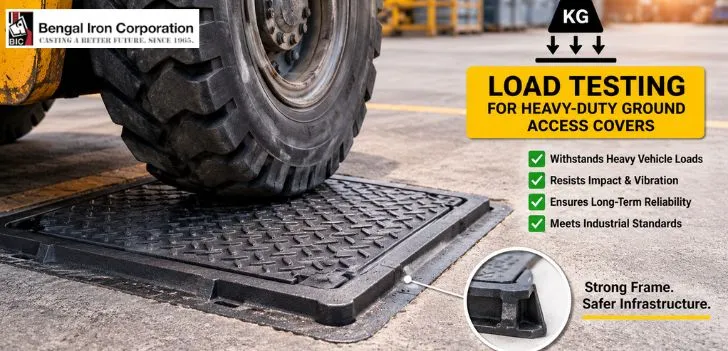
A ground access cover may look like a simple component placed systematically over an underground chamber. However, if you focus on the ground access cover’s mechanical depth, you can assess its usefulness. Every day, a ground access cover is exposed to pedestrians, cars, industrial heavy-duty vehicles, machinery vibration, and environmental impact.

In such a critical scenario, a vital question may arise in your mind: Is the chamber cover properly designed or tested to withstand the external forces? That is where load testing of heavy-duty ground-access covers becomes important.

Load testing can help the manufacturer ascertain whether top-notch quality recessed drain covers in India can withstand the specific external forces. For industrial buyers, load testing is valuable to ascertain drainage cover performance.

Let’s explore this blog to ascertain how load testing ensures reliable heavy-duty ground access covers.

What Is Load Testing for Ground Access Covers?

Load testing is a process used to assess whether a ground access cover and its associated frame can withstand specified loads under different testing conditions. The primary purpose of load testing is to verify the product’s capability to handle a specific load class for which the ground access cover is designed. The actual requirement for load testing of ground access covers mainly depends on the applicable standards, product design, dimensions, material quality, and installation method.

Load Testing Is More Than Just the Maximum Weight of the Covering

When an industrial unit searches for the top-quality ground access cover and its load testing method, they may ask a simple question: “How many tonnes can this cover hold?’ A cast iron drainage cover may undergo various load tests, including the standard parameters of cast iron foundry India, as per the load-bearing capacity of different locations.

Vehicle traffic can generate excessive forces, while vehicle wheel loads can impose standard loads on the manhole cover. That is why ground access cover design, material selection, dimensions, frame support, and the nominal load class are essential considerations while choosing a durable manhole cover on the basis of load testing capacity.

Why Material Selection Matters for Load Testing

The material of a manhole cover plays a vital role in resisting external load stresses. Let’s discuss two types of materials that are essential for drainage covers that can withstand external loads.

Cast iron

Cast iron is used for heavy-duty infrastructure because of its exceptional strength and durability. When industrial units search on Google for ‘ durable manhole cover near me,’ cast iron manhole covers may come to mind. Due to its high durability and load-bearing capacity, most industrial units prefer cast iron maintenance hole covers.

Ductile iron

Ductile iron offers a unique combination of strength and ductility that makes it useful for applications exposed to dynamic loads. A ductile iron cover features a unique design that reduces weight while retaining load-bearing capacity. For industrial buyers, no single drainage cover is suitable. You need to determine whether the materials and products are appropriately designed for a specific application.

Conclusion

For industrial units, roads, airports, or logistics facilities, selecting the best-quality ground access cover to standard-based load testing is vital. If your project requires heavy-duty ductile iron or cast iron drainage covers, you can choose BIC (Bengal Iron Corporation), which has proven foundry expertise and top-notch testing capabilities. You can contact us through our website to discuss your needs.

How Continuous Loads Affect the Functionality of Machinery Parts

Machines seldom suffer from failure caused by one significant incident. They tend to undergo failures from recurring or continuous loads that cause stress to different parts of the machine, which affects the integrity, shape, and functionality of the machine. Cast iron factory is significant in manufacturing strong machine parts that can sustain the load.

Continuous loading causes wear, fatigue, deformations, or cracking of the parts of the machinery according to the particular part and the way it works. It is important for one to know how the force affects the machine parts because it will help in identifying any problems that arise.

Top Ways Continuous Loads Affect the Functionality of Machinery Parts

Continuous loads may appear innocuous, but constant stress impacts performance and longevity. It is crucial to comprehend the fact that constant stress results in wear and tear.

Constant stress can cause fatigue

A part that is subject to repeated loading will not fail suddenly; it is possible that small cracks will form as a result of repeated stressing of the part, which will cause a weakening of the part even though the applied loading falls within acceptable limits.

Agricultural castings face practical working loads

The machinery used in agriculture is always subjected to tough conditions where the parts are subjected to vibration, pressure, impact, dirt, and varying loads. The agricultural castings that are used in this machinery should retain their structural stability during the repetitive process of operation of the machinery.

Continuous loads can cause deformation

A component that experiences constant pressure will change its shape very slowly over time. This applies especially to components whose shape must be exact in order to function properly. Deformation, even slight deformation, could have an effect on the operation of the components.

Protective components need load capacity too

Components like covers, frames, grates, and access facilities do not power the machinery; however, they have to be capable of withstanding their loading conditions. A manhole cover manufacturer in India catering to applications in industries and infrastructure has to take into account various issues like loading capacity, material strength, and traffic exposure in the production of covers.

Wear can build up gradually

Constant friction between two moving objects can increase the rate at which the machine wears out, particularly in cases where there is no adequate lubrication. Initially, you will experience some minor issues with the way the object moves, which may include some form of jerkiness or even unusual noises from the machine. If you do not attend to the problem in time, the small amount of wear will continue, resulting in wider spaces and consequently affecting the efficiency of the machine.

Surface defects can become bigger problems

Small flaws in casting, scratches, sharp corners, and machining marks could be stress concentration points. Continuous loading will cause higher stresses in these points compared to other sections of the component. It is therefore important to inspect and finish the part properly to minimize the risk of failure.

Conclusion

The impact of the continuous load on the machine can be through fatigue, wear, distortion, vibrations, and stress on materials. Selection of proper components and periodic inspections assist in the early detection of such problems to ensure proper performance of machines.

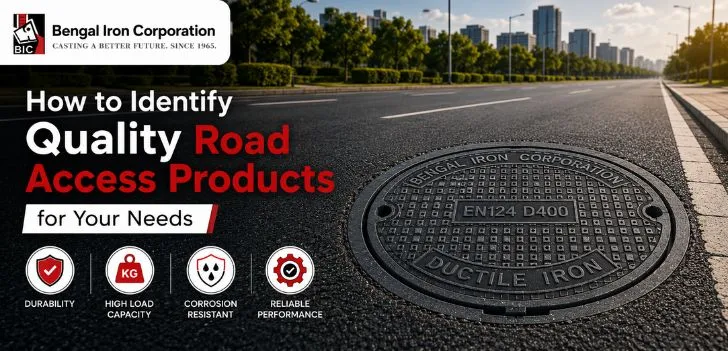
How to Identify Quality Road Access Products for Your Needs

All roads, driveways, and public spaces depend on infrastructure, although most people do not realize this at all times. The quality of materials that form the foundation of all these places contributes a lot to their reliability and efficiency. The selection of the right cast iron manhole cover forms one of the important parts of the development of such systems.

It is important to understand that selecting the right road access products does not solely revolve around picking the most economical products. One needs to think about various things such as the strength of the materials, weight capacity, resistance to corrosion, etc. The proper selection will help avoid future expenses and guarantee high performance for many years to come.

Various Ways to Identify Quality Road Access Products for Your Needs

The selection of appropriate road access equipment depends greatly on quality, durability, and efficiency. One should concentrate on the strength of the materials, their carrying capacities, and construction specifications.

Check the material quality first

In selecting road access products, it is extremely critical to choose the right material. Materials that are strong, such as ductile iron, cast iron, and robust alloys, should be used because these materials are designed to withstand weight and adverse weather conditions. It is just like choosing furniture in your house, which is made up of strong materials to withstand daily wear and tear. Similarly, the selection of the right material for road access products will guarantee their optimum functioning without much hassle of repair and maintenance.

Choose products that match the application area

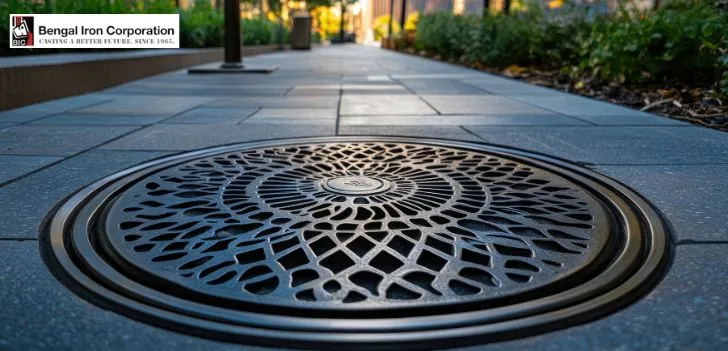
A solution will be needed for different environments. In cases of a driveway, an industrial unit, a drainage system, and a road, there will always be something that needs to be taken into account. Where a uniform and perfect finish of the surface is important, a good way is to go for a recessed manhole cover in India.

Look for proper design and functionality

A good road access product does not only mean that it covers the opening. It is important that it enables easy access to maintenance personnel while still maintaining security during normal times. The addition of elements such as anti-slip textures can make the product safer because it minimizes risks of slip and fall accidents. On top of this, having secure locks will prevent unauthorized access and provide you with peace of mind. When you have a road access product that is a perfect fit for your needs, its performance and ease of use will improve.

Check manufacturing standards

Products with high quality are produced by companies that manufacture their products following good manufacturing practices. You should consider working with companies that have reliable materials, better manufacturing processes, and quality control measures. The reputed manhole cover manufacturer in India produces products that ensure performance and consistency on large-scale projects.

Evaluate surface safety features

Road access items are an integral part of our everyday activities, which means that they must incorporate safety features. Such things include features like anti-slip designs, which prevent the user from slipping and falling down, especially when the situation is slippery. Although they may not seem to matter that much, they really help improve traction and stability. Simply put, it is things like these that make all the difference.

Conclusion

Ultimately, the selection of the right road access products relies on choosing the right materials that match your requirements. When assessed correctly, you will be in a position to ensure safety in the process of installation, cut down maintenance costs, and have efficient products.

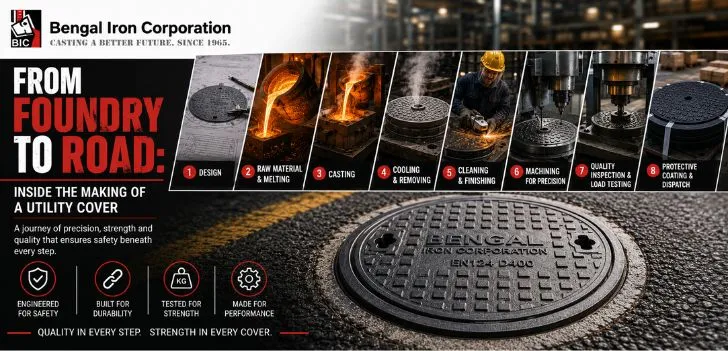
From Foundry to Road: Inside the Making of a Utility Cover

Have you ever walked over a utility cover without giving it a second thought? Most of us have. Yet beneath every durable cover lies a remarkable manufacturing journey that combines engineering, precision, and quality control. Utility covers play a critical role in protecting underground networks, including drainage systems, water pipelines, electrical cables, and communication lines. Hence, they must withstand heavy traffic, harsh weather, and years of continuous use.

Many buyers focus only on the cast iron chamber cover price, but the manufacturing process is what truly determines the product’s quality and lifespan. That is why every stage of the production matters. From selecting raw materials to conducting final quality checks, manufacturers follow a carefully planned process to ensure every cover performs safely on the road. In this blog, we will highlight the major steps included in manufacturing a utility cover.

How a Utility Cover Transforms from Raw Material to Road-Ready Infrastructure

In the segment below, we will explore how a recessed manhole cover in India moves through every stage of manufacturing, from raw materials to a reliable road-ready structure.

Designing the Utility Cover

The first notable step in making a utility cover is deciding its design. First, engineers determine the size, load-bearing capacity, locking mechanism, surface pattern, and application. A cover designed for a residential footpath differs greatly from one meant for busy highways or industrial zones. Every design follows relevant industry standards to ensure safety and durability.

Selecting High-Quality Raw Materials

The next step in making a utility cover is to select high-quality raw materials. The strength of a utility cover begins with its raw materials. Manufacturers always choose premium-grade iron and other required alloys to achieve the desired mechanical properties. Selecting high-quality materials improves resistance to corrosion, impact, and long-term wear, making the finished product dependable under demanding conditions.

Melting and Casting

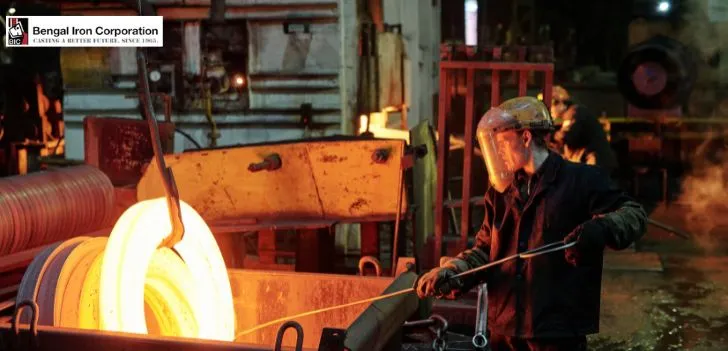
Once the raw materials are ready, the workers melt them in high-temperature furnaces. The molten metal is then carefully positioned into prepared moulds that match the required design. This casting stage demands exceptional precision because even small defects can affect the strength and performance of the final product.

Cooling and Removing the Casting

After pouring, the molten metal is allowed to cool naturally until it solidifies. The newly formed casting is then removed from the mould. Skilled workers inspect the casting visually before moving it to the next production stage.

Cleaning and Finishing

Freshly cast utility covers often have excess metal, rough edges, and surface impurities. These imperfections are removed through grinding, shot blasting, and surface finishing. This step improves both appearance and structural integrity while preparing the cover for further inspection.

Machining for Precision

Many of us are unaware that certain utility covers require machining to achieve accurate dimensions and a perfect fit. Precision machining ensures that the cover sits securely within its frame, reducing movement, noise, and unnecessary wear after installation.

Quality Inspection and Load Testing

This is one of the most critical stages of the manufacturing process. Each utility cover undergoes strict quality inspections, dimensional checks, and load tests to verify its strength and reliability. Only products that meet established quality standards move forward for dispatch.

Protective Coating and Dispatch

Finally, manufacturers apply protective coatings to enhance corrosion resistance and extend service life. After packaging and final verification, the utility covers are shipped to infrastructure projects, municipalities, construction companies, and industrial sites, ready to serve for decades.

The Conclusion

So, every utility cover tells a story of engineering expertise, skilled craftsmanship, and rigorous quality control. From the first design sketch to the final installation on roads, each manufacturing stage contributes to creating a product that protects vital underground infrastructure while ensuring public safety.

If you are looking for premium-quality utility covers manufactured with precision, durability, and uncompromising quality standards, Bengal Iron Corporation can be your trusted partner. With years of manufacturing excellence and a commitment to superior engineering, Bengal Iron Corporation delivers reliable utility cover solutions that stand the test of time. So search for the term ‘manhole cover near me’ and get in touch today, and invest in products built for performance, safety, and lasting value.

Which is the Best: Light Duty or Heavy Duty Chamber Cover?

Chamber covers are today becoming highly ubiquitous on roads, thus facilitating daily lives greatly. At the time of selection of the most suitable manhole cover near you, usually there are two different choices: light-duty and heavy-duty.

Though both are best, still, based on utilities, it may become easy to make a generous selection. With the right type of manhole cover, it may become easy to ensure the highest safety, efficiency, and effectiveness of any construction.

How does the Performance Differ between Types of Manhole Covers?

As per the needs of modern infrastructure, the choice between heavy-duty and light-duty chamber covers is a highly vital issue that persists. Both are utilized in the following:

  • Drainage systems
  • Road infrastructure
  • Municipal drainage system

However, their performance varies based on specific applications and conditions of usage.

There are several factors that influence the choice of chamber covers

  • , such as:
  • Load-bearing capacity
  • Durability
  • Installation safety factor, etc.

Are you ready to make out the differences that exist between light-duty and heavy-duty chambers? Here they are…….

Understanding Light Duty and Heavy Duty Covers in Infrastructure

Light-duty manhole covers are usually manufactured using fiber-reinforced plastics. They are highly popular in modern-day construction projects as they include lightweight durability and resistance to corrosion.

Yet, a typical heavy-duty iron manhole cover is strong enough for handling heavy traffic loads in commercial buildings or industrial construction sites. Almost all types of manhole covers can be used for sewer systems and underground work.

The overall choice can be determined based on the nature of work and conditions. By making an appropriate selection, it can be ensured to conclude with an incident-free operation with the right recessed chamber cover in India.

What are Some Key Differences that Exist?

When conducting a detailed comparison between lightweight and heavy manhole covers, several key considerations arise. The ones that cannot be overlooked under any condition include the following:

  1. Easy to handle – The lightweight nature of manhole covers makes them easy to install, thus enabling safe installation on roads with little labor.

But stiff iron manhole covers require high labor costs regarding installation.

  1. Strength – An iron manhole cover is popular for its high load-bearing strength. It may be used for heavy load applications like industry and highway.

On the other hand, a lightweight manhole cover can easily carry light to maximum medium loads only.

  1. Durability and cost of maintenance – Light-duty covers are popular for projects that demand durable performance with hardly any maintenance.

But iron manhole covers require regular maintenance so that they are easy to prevent early rusting.

These are some vital differences that must be considered at the time of selecting the most suitable chamber cover.

As a Conclusion!

From above, it is clear that there are several important factors to consider at the time of selecting the best chamber cover. Still, if you are searching for a superb quality cast iron cover at a moderate price, then better make your way to BIC.

Among a wide range of decent choices, it will become easy to make a generous selection for the project.

How Heavy-Duty Castings Improve Irrigation Infrastructure Safety

Without a reliable and efficient irrigation system, conducting agricultural tasks is nearly impossible. An efficient irrigation network for agricultural tasks is essential to ensure the smooth supply of water everywhere. Every component of the irrigation network, such as utility chambers and drainage systems, depends on durable components that can easily withstand harsh environmental conditions.

While irrigation pipelines and water channels receive adequate attention, heavy-duty castings can enhance the safety of irrigation infrastructure with broader prospects. Durable underground utilities and heavy-duty infrastructure components play a vital role in keeping irrigation projects safe and reliable over long periods.

As government bodies and agricultural infrastructure development authorities invest in premium-quality irrigation networks, choosing premium-quality agricultural castings is becoming increasingly important to ensure safe irrigation infrastructure.

Let’s discuss in this blog how heavy-duty castings improve the safety of irrigation infrastructure.

What Are Heavy-Duty Castings?

Heavy-duty castings are engineered metal components designed to perform under challenging operating conditions. In irrigation infrastructure, heavy-duty castings are commonly used for several purposes, such as:

  • Underground utility access covers
  • Valve chamber covers
  • Inspection chamber covers
  • Drainage system components
  • Surfaces boxes
  • Custom infrastructure casting

These components are typically manufactured from high-quality cast iron or ductile iron to provide exceptional strength and durability in harsh environmental conditions.

Heavy-Duty Castings Improve Irrigation Infrastructure Safety

In this section, we discuss how heavy-duty casting enhances the safety of irrigation infrastructure.

Protect underground utility networks

Modern irrigation systems primarily comprise numerous underground assets that require periodic inspection and maintenance. In such a case, heavy-duty castings can provide a secure protective layer that shields these access points from external impacts and allows authorized personnel to access the utilities as per the requirements. This unique protection can extend the lifespan of underground infrastructure and reduce the risk of accidental damage.

Withstand heavy operational loads

Agriculture is not limited to manual farming. Maintenance vehicles, tractors, and service machinery need to travel across the irrigation facilities. That’s why high-strength casting is engineered with durable features to withstand excessive loads without cracking or deforming structural integrity, making it suitable for safe agricultural operation.

Enhance worker safety

Routine inspection is essential for irrigation tasks. A properly fitted, high-quality manhole cover can provide a stable, secure surface that drastically reduces the risk of sudden slips and other hazards during maintenance tasks. It creates a safe working environment for field engineers and the maintenance team.

If you are searching on Google for top-quality manhole covers near me, you will definitely find reliable solutions for your agricultural infrastructure project.

Better resistance against harsh weather

Irrigation infrastructure is mainly situated in harsh weather conditions and is continuously exposed to moisture, mud, seasonal flooding, temperature fluctuations, and other challenging conditions. In such situations, premium cast iron or ductile iron castings can withstand challenging weather conditions and deliver reliable performance year-round.

Support efficient water management

Well-protected underground infrastructure primarily supports the efficient, smooth operation of irrigation systems. When the inspection chambers, valve pits, and utility access remain secure, it can drastically safeguard the irrigation system. This proactive approach supports uninterrupted wheat distribution and safeguards agricultural infrastructure against adverse conditions.

Conclusion

Safe and efficient irrigation systems can support agricultural productivity and maintain sustainable water management. If your organization is planning to start a new irrigation project or upgrade the existing infrastructure, choosing a trusted and heavy-duty casting can make a significant difference. At Bengal Iron Corporation (BIC), you can get precisely engineered cast iron and ductile iron irrigation infrastructure products to meet the demands of agricultural infrastructure projects.

Why Load Ratings Matter When Choosing Manhole Covers for National Highways

National highways carry thousands of vehicles daily. Whether it is passenger cars, buses, or heavily laden trucks transporting essential goods, smooth traffic flow matters most for road safety. While road smoothness matters the most, a critical component that works silently beneath the traffic is the manhole cover.

However, poorly selected manhole covers can pose safety hazards, disrupt traffic, increase road maintenance costs, and shorten the lifespan of road infrastructure. That’s why load ratings play a major role when selecting the right manhole covers for highways.

For government agencies, highway authorities, municipal corporations, and infrastructure developers, understanding load ratings while selecting recessed drain covers in India is essential for a smooth and durable road network.

Let’s explore this blog to understand why load rating matters while choosing manhole covers for national highways.

What Do You Mean by Load Rating for a Manhole Cover?

A load rating indicates the maximum weight a manhole cover can safely withstand without failing or cracking under extensive traffic loads. National highways mainly experience continuous heavy commercial traffic pressure, multi-axle truck pressure, construction vehicle pressure, and repetitive loading impacts.

If the highway development authority selects the manhole cover on the basis of a wrong load rating, it can cause premature road damage, leading to manhole structural damage and affecting manhole infrastructure integrity and road safety.

Understanding Highway Load Conditions

Not all types of heavy vehicles apply the same weight. A properly engineered manhole cover mainly experiences several forms of loads, such as.

Static loads

This type of weight is mainly applicable for stationary vehicles.

Repeated fatigue loads

When thousands of heavy vehicles cross the same section of the national highways every day, it can gradually affect poorly designed manhole covers.

Shock loads

Sudden forces from overloaded trucks or uneven road surfaces.

Features of a Highway-Ready Manhole Cover

While government authorities plan to install a manhole cover for road safety, considering the essential features of a highway-ready manhole cover is essential. Let’s discuss the important characteristics of a highway-ready manhole cover.

High load-bearing strength

This feature is mainly for withstanding constant heavy commercial traffic load without structural failure. A cast iron manhole cover, manufactured by a trusted Cast Iron Foundry in India, is engineered to withstand constant heavy traffic loads.

Precision manufacturing

Accurate fitting between the manhole cover and frame can minimize movement and vibration.

Long service life

High-quality engineering in a manhole cover can reduce wear even under critical road conditions.

Corrosion resistance

National highways mainly experience rain, moisture, and chemicals, which require the government authorities to choose corrosion-resistant manhole covers. A corrosion-resistant manhole cover can offer reliable performance over the years.

Stable installation

A highway-ready, top-notch manhole cover can provide proper seating, reducing rocking or rattling as heavy vehicles pass.

Why Proper Load Ratings Improve Highway Road Safety

Road safety is not only about pavement quality. A properly selected manhole cover with a road rating can offer stable traffic and other exceptional benefits. Let’s discuss it in detail.

  1. Maintain smooth road surfaces.
  2. Reduces unexpected road hazards
  3. Prevent structural failures of road infrastructure.
  4. Improve driver confidence on highways.
  5. Reduce the risk of accidents on the national highway.

When government bodies select manhole covers with proper load rating, guided by the top manhole cover manufacturer in India, it can drastically improve national highway safety and enhance smooth traffic flow.

Conclusion

National highways are among the busiest places, experiencing heavy traffic daily. If government agencies are planning to install or renovate old road infrastructure, buying top-quality cast iron manhole covers from Bengal Iron Corporation (BIC) can be a reliable decision. You can contact us through our website to place your order.

Understanding the Importance of Mold Design in the Casting Process

Mold design plays a crucial role when casting. This is because there are parts that require precise measurements. There is an SG iron castings manufacturer that knows well that the mold determines not only how it will hold the metal but also how the cooling process will take place to determine the final product. A small mistake in the design may cause serious complications like shrinking, warping, and poor finishing.

Mold designing is essential since it influences all aspects of manufacturing. Flow paths, gating, vents, and cooling time play an important role in determining the quality of the finished product, but this does not necessarily mean it is always apparent. In casting, proper mold design ensures molten metal is formed into parts with a high degree of reliability.

Understanding the Importance of Mold Design in the Casting Process

Molds play a very important role in the casting process since they dictate how the metal cools down. A properly designed mold will prevent flaws, improve surface finishes, and provide dimensional accuracy at minimal cost.

Mold design sets the tone before anything else happens

The cast starts with the mold, the most important consideration for your project. You need a good mold design. Without it, you will always have problems, resulting in an inferior final product. Taking the time to create a quality mold saves trouble later on.

Flow of metal is everything

The melted metal will run fast through the mold and cool down in shape formation. This process is not always easy since it may have defects such as voids and improper fillings caused by a defective mold design. Proper redesign of the mold can eliminate those defects that could otherwise be viewed as defects in the metal itself. This is particularly necessary in the case of robust parts, such as the recessed chamber cover. If the filling isn’t even, it can create weak spots that may cause the part to fail under stress.

Dimensional accuracy keeps everything usable

When a casting is produced with even slight inaccuracies, it can cause significant problems during assembly later. In many workshops, you will often hear experienced craftsmen say, it fits after machining. This means the molding process lacked sufficient precision and control, potentially requiring extensive adjustments to ensure everything fits properly in subsequent production steps.

Shrinkage compensation is non-negotiable

During the cooling process of metal, contraction occurs. If the engineers fail to consider the factor during planning, then problems could arise unexpectedly. Good designs take this into consideration when the metal starts to contract, thus ensuring the proper fitting of the metal parts. This is particularly applicable in large municipal parts like the manhole cover manufacturer in India. The few millimeters difference will have an impact on the effectiveness and safety of the part.

Consistency is where real value shows up

Producing a successful casting on the first try can be easy, but the real challenge is consistently producing a hundred identical castings. This is where good mold design is important. It is important to make sure that the casting process can be replicated with similar results, without having to keep making modifications.

Conclusion

Mold design is an important consideration for the casting process. Good mold design will make everything easier, faster, defect-free, and with parts meeting all the specifications. Bad mold design, on the other hand, will lead to problems related to cooling, shrinking, and fitting, despite the material and processes being good. The best casting starts from the right mold, not from the molten metal.

Why Municipal Authorities Are Prioritizing Durable Solutions for Community Resilience

The most successful communities are created long before we know their existence. Our survival depends on roadways, pipelines, drainage systems, among other utility systems, which have to endure additional pressure due to increased population levels and the environment. One of the reasons the government is working hard to create communities that will endure through time rather than opting for short-term solutions is the increased pressure. Some of these permanent materials are products of a ductile iron foundry in India.

A city must have enough infrastructure to be able to cope with extreme weather conditions, accommodate demands, and be able to expand with time. This is not just a case of reducing maintenance costs. Making a long-lasting choice allows municipal authorities to increase the safety and reliability of services and save money for taxpayers. When any construction project needs to last for decades, resiliency becomes crucial rather than a secondary matter.

Various Reasons Municipal Authorities Are Prioritizing Durable Solutions for Community Resilience

Community infrastructure needs to be dependable to cope with rising requirements. There is a trend nowadays for municipal governments to opt for sturdy and sustainable infrastructural measures.

Long-term value beats short-term savings

Such construction work is usually limited in terms of budget, and because of this, the preference for cheaper options may be given. But municipalities have found out that replacing parts that have become defective too often turns out to be a more costly affair compared to using quality material in the first place. For instance, one faulty drainage lid installed at an intersection might result in road closure and other inconveniences.

Infrastructure needs to handle real-world conditions

The public infrastructure goes through numerous problems on a daily basis that go unnoticed. Some examples include heavy vehicular traffic, vibration, fluctuation in temperatures, and the presence of water. It is due to these reasons that local governments rely on the items provided by a reputable cast iron foundry. The reason is that a cast iron factory has been known to handle difficult conditions, with its high load-bearing capacity and great wear resistance.

Climate resilience is now part of every decision

The weather becomes less predictable, hence the increase in rainfall, heatwaves, and floods that put pressure on the drainage system. Durable infrastructure will help cities cope with such problems since they have good drainage features. Though there is no perfect material in any construction, the use of good infrastructure improves its durability.

Quality manufacturing supports reliable performance

Engineers consider factors such as the standards of production, loads, dimensions, and quality control while assessing a product, rather than the appearance alone. The use of an experienced manhole cover manufacturer in India becomes very important for infrastructure projects due to the need for standardized products that function efficiently without early breakdowns.

Better materials mean safer public spaces

One of the reasons why safety plays a major role in ensuring that there is proper infrastructure is because a cracked or broken drain cover becomes very dangerous for people walking, cycling, or driving. Proper materials are used so that there are no unexpected accidents for the maintenance crew.

Lower maintenance creates better budget planning

Every maintenance operation involves manpower, tools, traffic control, and administration. Robust infrastructure helps towns improve their services without addressing problems. This process allows for scheduled maintenance as opposed to urgent maintenance. There are many financial advantages of having stability in infrastructure projects.

Conclusion

It has now become a necessity rather than a mere option. The municipal authorities can save on their maintenance costs and improve the overall safety levels of the city by making a choice that is based on quality materials and components.

Enquire Now

Get In Touch
×
Best Cast Iron Supplier Top Ductile Iron Manufacturer