
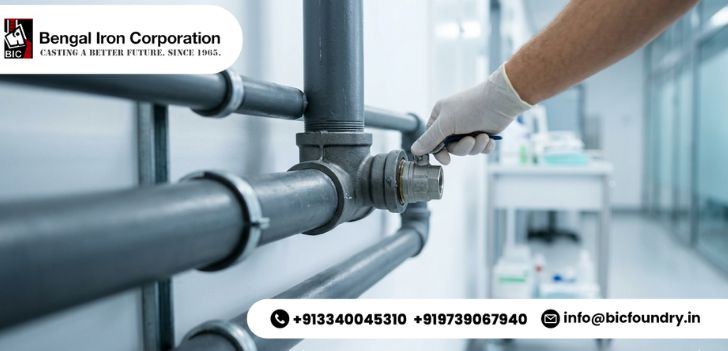
Are Grey Iron Pipes Suitable for Healthcare Facilities?

At the time of selecting the most appropriate choice for plumbing systems in healthcare facilities, you may be in a fix regarding the selection of materials. Among all, grey iron pipes are the most commonly used option.

Primarily composed of carbon and silicon with other elements like manganese, phosphorus, and sulfur, the pipes facilitate high tensile strength and noise reduction. If well-maintained, their installation may assure patient comfort, which is the priority in healthcare facilities.

Formation of the graphite microstructure during the solidification process provides certain exclusive properties. Approaching a reliable and trustworthy cast iron pipe supplier near me will permit us to conclude the project as desired, while respecting patients.

Does the Right Plumbing Contribute to Infection Control?

Healthcare facilities are popular for their ability to prevent the spread of harmful infections. The selection of the right material for plumbing design plays a significant role. Early leaching and corrosion of pipes may result in the spreading of harmful infections.

That is why it is essential to make informed choices at the time of construction as well as renovation in terms of materials for pipes. Exclusively manufactured cast iron pipes and fittings can ensure compliance with health and safety standards.

Effective collaboration with facility management can contribute to the initiative to prevent the spread of waterborne infection through the plumbing system.

Can Pipes Affect Patient Safety Adversely?

Usually, piping systems that are left unattended and not maintained for long are prone to damage without any early notice. As metals and other chemicals wash out from the pipe into the water, it results in affecting the quality of the water and patient safety.

Gradual destruction of metallic pipes by chemical reactions with the surrounding environment may lead to corrosion. Reduction in the flow of water, leakage, and microbial growth is the outcome. It risks the lives of patients and professionals working in the facility.

In the long run, it may harbor harmful pathogens, thus posing a significant risk for serious infections. Taking these points in consideration, carrying out regular maintenance of grey iron pipes by experts may prevent such unwanted results.

Which Type of Iron Pipes Can be Used as Supply Lines?

Whenever it comes to plumbing supply lines, the integrity plays a highly critical role in delivering safe and potable water. From drinking to carrying out patient care activities, water plays a vital role.

Flexible cast iron water supply pipes are not only easy to install, but are also adaptable. Such exceptional features make them among the excellent choices for connecting water supplies.

High durability and resistance to early corrosion ensure reliable performance with time.

What about Drain Lines?

Proper and effective sanitation in hospitals hinges on the effective removal of wastewater through well-designed drain lines. The selection and installation of the right materials, including grey cast iron, may prevent backflow and the spreading of harmful pathogens.

From above, it is clear that superb-quality cast iron pipes can benefit healthcare facilities. At a renowned supplier like BIC, you may come across the right choices in terms of piping systems. Browsing through its hubless pipe fittings catalogue and taking expert opinion may help make a generous selection.

What Makes Cast Iron Pipes Best for Underground Sewage?

When it comes to selecting the most appropriate piping material, which option would you prefer? Though PVC and ductile iron are widely available, most people are switching to grey iron pipes.

Did you ever wonder about the reason? It not only has a long life, but also meets modern infrastructure demands. Are you also planning to go with superb quality iron pipes in your forthcoming project?

Rather than hovering here and there, it will be a great option to make your way to a trustworthy cast iron pipe supplier. Among a decent collection of options, making the right choice will hardly remain a barrier.

What are the Factors that Make Grey Iron Pipes Suitable?

At the time of carrying out operations, especially those related to plumbing systems, the piping system that you prefer must have high strength. Those items devoid of durability and long life may lead to re-repair or even any type of mishap.

Exclusively manufactured IS 15905 pipes are not only manufactured using iron, silicon and carbon; but also have traces of additional elements like sulphur and manganese. As these pipes hardly corrode easily, they are considered to be ideal for carrying water and sewage.

They can not only be used under the ground, but also above the ground.

Is it Possible to Withstand High Pressure by Those Pipes?

This is one more vital property that you must consider at the time of selecting pipes for sewage projects. Cast iron pipes, unlike other alternatives, are popular for their exceptional thickness.

Such a great property makes these piping systems suitable to withstand high pressure plus external loads. Therefore, these pipes can be easily utilized in both home-based and commercial type plumbing systems.

Is there Any Maintenance Required by These Pipes?

Usually, maximum people commit the blunder of not looking back to their piping systems post installation. They forget that there are lots of advantages associated with carrying out regular maintenance.

There are times whrn grey iron pipes may suffer a bit of internal corrosion due to acidic agents or other wastewater chemicals. Long-time accumulation of such dirts may result in clogging, thus reducing the flow capacity. It may lead to cracks or breakage in the piping.

Staying in touch with experts may help in identifying certain damages that have occurred with time. Best suppliers of cast iron pipes usually have contacts with expert professionals who can help during rehabilitation, such as:

  • Lining of an epoxy coating
  • Insertion of a liner

These steps may help prolong the service life, preventing early damage to the pipes.

What Makes Grey Irons Versatile for Other Industries?

Cast iron pipes are considered to be versatile for almost all other industries due to their ability to transport different types of fluids and gases. They are being used widely in industrial settings that include the use of chemicals during the manufacturing process.

Their resilience and high tensile strength make them suitable to survive under exclusively harsh conditions. Grey iron piping systems can be used efficiently in moving industrial fluids regardless of the internal and external temperatures.

Are you putting up in an urban area? Then, cast iron piping systems may contribute to sustainable water and sewage management. With efficient guidance related to the surface, it is possible to prevent unwanted outcomes like floods.

The Step-by-Step Process of Manufacturing Grey Iron Pipes

Grey iron pipes have served water supply and drainage systems for decades due to their strength, durability, and excellent corrosion resistance. Their reliability comes not only from the material itself but also from a carefully controlled manufacturing process. Understanding how CI pipe manufacturers in India produce grey iron pipes highlights why they continue to perform well in demanding environments. Here, we will guide you through a detailed, step-by-step procedure to explain the manufacturing process of cast iron pipes.

7 Major Steps of Grey Iron Pipe Manufacturing

Grey and cast iron pipes are renowned for their durability, strength, and versatility across several sectors. Knowing how these pipes are made reveals the expertise and precision required in their production. Below is a clear, step-by-step explanation of how manufacturers produce grey iron pipes.

Step 1: Selecting & Preparing Top-Quality Raw Materials

The manufacturing process for grey iron pipes begins with selecting high-quality raw materials. Cast iron typically contains scrap iron, pig iron, and steel, combined with alloying elements such as silicon and carbon. Grey iron is a thriving combination of:

  • Pig iron(70-80%)
  • Steel and Scrap Iron(10-20%)
  • Alloys such as Silicon and Carbon(2-5%)

All these materials undergo careful inspection to ensure quality and meet the rigorous standards.

Step 2: Melting the Iron

The next step in making grey iron pipes is melting the iron. The foundry team melts the raw materials in a high-capacity furnace at temperatures above 1,150°C (2,100°F). Below are the types of furnaces commonly used in grey iron pipe manufacturing.

  • Electric Induction Furnace: Electric induction furnace is environment-friendly and highly efficient. For this reason, they’re appropriate for accurate control of metal composition.
  • Cupola Furnace: Cupola furnace is a cost-effective and traditional variant, often used for large-scale production.
  • Rotary Furnace: Rotary furnace is versatile and thus ideal for specialised applications that require uniform heating.

During melting, leading CI pipe manufacturers in India carefully blend the raw materials to achieve a consistent molten iron mixture. They also carefully track the molten metal’s chemistry to maintain exact compositional balance.

Step 3: Moulding

The third step of making cast iron pipes is moulding. After the iron is molten, the operators pour it into sand, resin, or metal moulds. Engineers design these moulds to match the exact shape and dimensions required. This stage is critical to ensuring the finished casting meets precise size and quality standards.

Step 4: Cooling & Solidification

Cooling and solidification are the phases in which the molten iron in the mould cools and solidifies. This cooling procedure ensures that the casting takes its ultimate shape while retaining structural integrity. Proper cooling process prevents imperfections and ensures the durability of the casting.

Step 5: Finishing & Cleaning

Once the metal hardens, workers remove the castings from the moulds and begin cleaning. They remove leftover sand, scale, and unwanted residues to ensure a clean surface. The castings then undergo finishing steps such as grinding, machining, and polishing to achieve accurate dimensions and the required surface finish.

Step 6: Inspection of Quality & Material Grades

Grey iron is available in different grades, each suited for a particular application. You can refer to any hubless pipe fitting catalogue for a more precise and detailed understanding. Standard material grades include:

  • Ductile Iron: Offers flexibility and superior strength
  • Grey Iron: Famous for its excellent thermal conductivity and machinability
  • White Iron: Highly resistant to scraping, appropriate for wear-resistant applications
  • Malleable Iron: Combines ductility and strength, used in industrial fittings

Every grey iron casting undergoes stringent quality checks. These involve material checks, dimensional tests, and performance evaluation to ensure the product meets industry standards and client requirements.

Step 7: Packaging & Delivery

The last and final stage of manufacturing grey iron pipe is packaging and delivery. This stage involves securely packaging the casting to protect it during transport. Our logistics professionals ensure prompt, efficient delivery, reinforcing our commitment to reliability and excellence in cast iron manufacturing.

The Closing Thoughts

As a leading CI pipe manufacturer in India, Bengal Iron Corporation combines decades of industry experience with advanced technology and a strong focus on quality. Our modern manufacturing facilities feature state-of-the-art equipment, enabling high precision, consistent performance, and operational efficiency at every stage of production. Reach out to us today to discover our high-quality cast iron castings and see firsthand the benefits of collaborating with a trusted industry leader.

Unmatched Reliability: Why Grey Iron Pipes Remain on Top in 2025

Some materials arrive and go with trends, but a very few stand strong through centuries. Cast iron or grey iron pipes surely fall in the latter category, despite the rise of HDPE, PVC, and other contemporary alternatives; architects, engineers, and contractors still trust the dependability of cast iron. In fact, any seasoned cast iron pipe supplier can tell you that the demand in 2025 is as constant as ever. So why does this conventional option continue to surpass many newer materials? Let’s dive deeper.

Strength That Stands the Test of Time

Grey iron or cast iron is famous for its sheer resilience. Unlike plastic alternatives, it doesn’t deform under heat or harsh weather conditions. Infrastructure projects and buildings across the globe rely on century-old grey iron pipelines. It’s because those pipes function without fail, which is a living testament to their durability.

Why Cast Iron Still Surpasses Modern Alternatives?

Though HDPE or PVC might seem inexpensive initially, long-term stability tells another narrative. Grey iron or cast iron demands fewer replacements, which cuts down the lifecycle costs for larger-scale infrastructure. As per some reputable organization, the real price of a pipe lies in its longevity, and grey iron wins here hands down.

Meant for Sustainability

Sustainability is another notable reason grey iron thrives in 2025. These pipes are 100% recyclable, and their production often involves recycled scrap metal. For this reason, using these pipes notably decreases environmental impacts. Unlike plastic that causes microplastic pollution, grey iron returns to the cycle effortlessly.

Hubless Pipes: The Modern Version

With the latest developments and innovations, grey iron hasn’t stayed stagnant. With hubless designs, installation of cast iron pipes is now easier, faster, and cost-effective. You can refer to the hubless pipe fittings catalogue to discover options that amalgamate modern convenience with traditional strength.

Uses That Prove Its Worth

From municipal sewage networks to high-rise apartments, cast iron serves a vast range of requirements. Even sectors like farming depend heavily on agricultural castings made from iron. It’s because grey iron castings are ideal for heavy-duty water management networks and irrigation. The most common yet significant applications of cast iron pipes are the following.

Commercial Buildings

Cast iron pipes are famous for fire-safe piping solutions in commercial buildings.

Urban Infrastructure

In urban infrastructure, cast iron pipes are ideal for stormwater, sewer, and drainage networks.

Agriculture

In agriculture, cast iron pipes are ideal for long-lasting irrigation support.

Value vs Cost: The Big Picture

When compared to other options, cast iron pipes may seem a bit expensive. Hence, it’s very easy to select cheaper alternatives. However, the hidden price of frequent replacements, repairs, and safety concerns can make these options highly expensive in the long run. Grey iron with its like prolonged service life offers peace of mind which newer alternatives merely match.

FAQs on Grey Iron Pipes

Q. Are cast iron pipes still relevant in modern infrastructure?

A. Yes, cast iron pipes are still relevant in 2025 for sewage, drainage, and fire-safe piping due to their safety features and durability.

Q. What is the lifespan of cast iron pipes?

A. Normally, cast iron pipes last up to 75-100 years with maintenance and proper installation, far outlasting plastic alternatives.

Q. Are hubless grey iron pipes better?

A. Yes, a hubless layout of grey iron pipes makes installation faster and decreases labour costs. It also helps in maintaining conventional cast iron durability.

Q. Are grey-iron pipes nature-friendly?

A. Yes, grey iron pipes are 100% recyclable and consist of recycled scrap. For this reason, grey iron pipes are a 100% sustainable option compared to plastics.

The Closing Thoughts

In an ever-evolving world of technology and materials, grey iron pipes remain constant. They’re a blend of safety, reliability, and sustainability. Whether it’s for agricultural use or urban infrastructure, the timeless power of grey iron continues to prove why it’s still the top option in 2025. Contact Bengal Iron Corporation, one of the best cast iron pipe suppliers, to receive premium quality cast iron pipe fittings at a competitive rate.

Enquire Now

Get In Touch
×
Best Cast Iron Supplier Top Ductile Iron Manufacturer